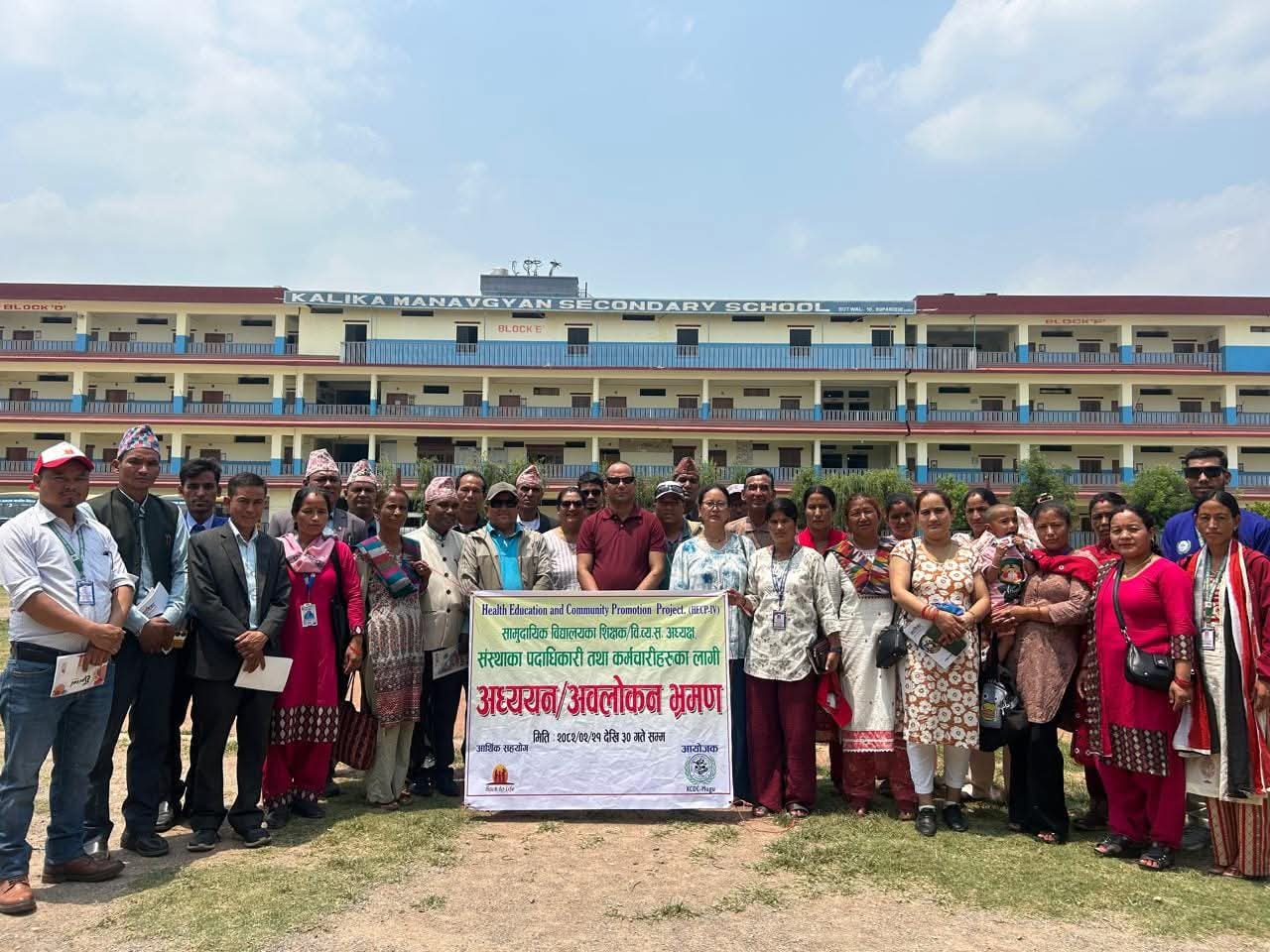
KCDC have been working in improving the standard of teaching-learning activities in the less-equipped and less quality schools in the mugu Nepal. Every year, at least one exposure visits program organized as part of our ongoing efforts to enhance the quality of education and promote community engagement in Mugu district, the Health, Education and Community Promotion Project-IV organized a comprehensive Exposure Visit and Observation Program for teachers, parents, project staff, and board members. The visit, conducted with the financial support of Back to Life e.V. Nepal in partnership with KCDC, Mugu, aimed to deepen the participants’ understanding of effective educational practices while also fostering a greater appreciation for Nepal’s rich cultural heritage.
The program involved taking a selected group of stakeholders from Mugu to various model schools and historically significant sites across Nepal. The primary objective of the visit was to expose participants to well-functioning educational institutions that demonstrate best practices in school management, classroom instruction, child-friendly learning environments, and community involvement. By observing these successful models, teachers and project staff were able to gain valuable insights into replicable strategies that can be adapted and implemented in their own schools and communities back in Mugu. These visits also served to strengthen the capacity of local educators and raise their awareness about the importance of innovation and inclusivity in education.
In addition to visiting model schools, the participants also toured several important historical and cultural landmarks. These included UNESCO World Heritage Sites and culturally significant
monuments that represent Nepal’s diverse history and traditions. Through these excursions, the participants developed a deeper appreciation for the country’s cultural assets, and the experience emphasized the importance of preserving and promoting Nepal’s heritage within their own communities. The historical exposure added a meaningful dimension to the educational component of the visit by connecting academic development with cultural identity.
The program not only provided professional development for teachers and staff, but also encouraged parents and board members to actively engage in the education process. It created a platform for dialogue, shared learning, and collaboration among various stakeholders. Following the visit, participants expressed increased motivation to apply the lessons learned in their local contexts and to take collective responsibility for improving educational standards in Mugu. Furthermore, the cultural exposure inspired many to advocate for the integration of cultural education in school curricula, helping to instill pride and respect for local traditions in younger generations.
Despite a few logistical challenges, particularly in coordinating travel for participants from remote areas, the exposure visit was successfully implemented. All participants actively engaged in the learning process and returned with valuable experiences that will benefit the larger community. The event was a significant step forward in bridging the gap between rural and urban educational practices, and it reaffirmed our commitment to promoting holistic, community-based education.
We would like to extend our heartfelt gratitude to Back to Life e.V. Nepal for their generous financial support for exposure visit. Their continued collaboration has made it possible to create such transformative learning opportunities, and we look forward to building on the momentum generated through this activity in future initiatives. As a gesture of respect and gratitude, tokens of love were exchanged between the visiting team and the host schools, symbolizing mutual learning, appreciation, and long-term collaboration.